
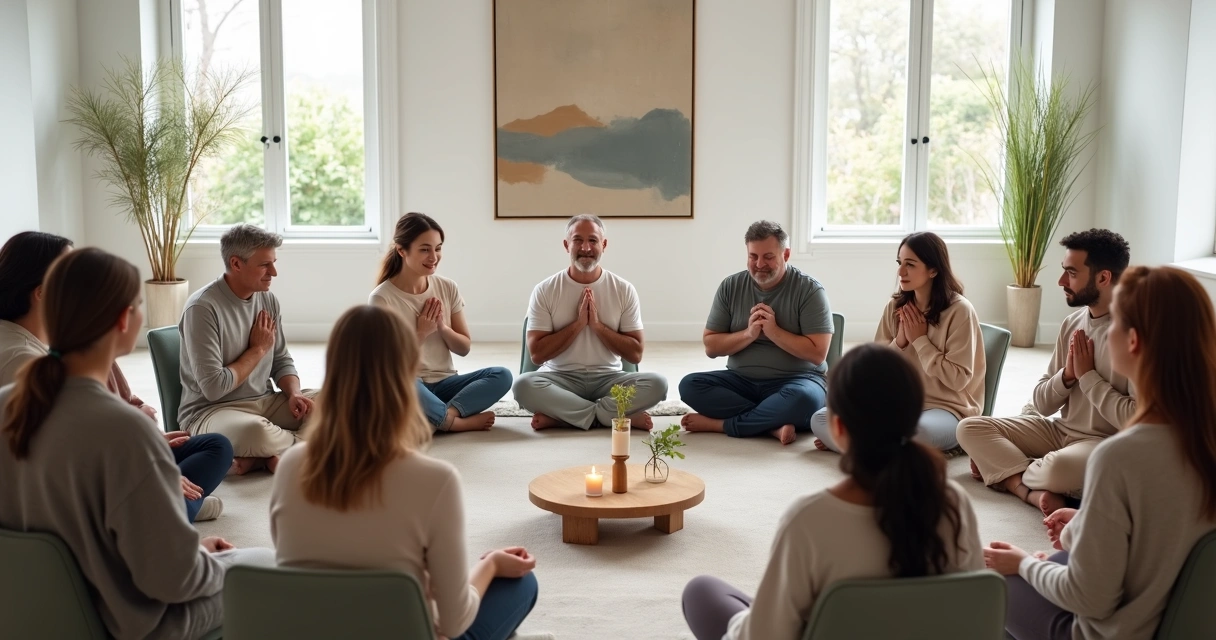
When we think about emotional health, much of the focus is often placed on the individual journey—personal growth, self-reflection, and the courage to confront private wounds. But as we interact within families, organizations, and societies, it becomes clear that our emotional healing is also deeply collective. Why is it that some teams become stronger after a crisis, while others struggle to move forward? Why do some communities pull together in tough times, but others fall apart?
In our experience, the answer often points to one concept: acceptance. Acceptance is not about resigning or giving in. It is an intentional practice of seeing situations, emotions, and differences as they are, so we can address what needs to change with honesty and clarity. It sounds simple, but this quality has remarkable power in group healing. In this article, we discuss why acceptance makes such a difference, and how it transforms the way groups recover, reconcile, and grow together.
The roots of collective pain
Most wounds in a group do not begin suddenly. They grow from misunderstandings, repeated conflicts, suppressed emotions, or unresolved harm. This pain can look like:
- Ongoing tension between members
- Lack of trust in a team or community
- Cycles of blame and avoidance
- Silencing of certain voices
- Rigid group behaviors that resist change
Unhealed collective pain does not only belong to the past. It continues to shape new behaviors, decisions, and feelings. We might notice it as a heaviness in the room or as silence when people are afraid to speak honestly. Without intervention, this pain spreads. It limits the possibility of true connection and cooperation.
What we mean by acceptance
Acceptance is recognizing reality as it is, without denying or justifying it. This applies to how we feel, what has happened, or who is present in the group. In collective healing, it means we can:
- Acknowledge pain or conflict without blaming or shaming
- Listen to perspectives that challenge our own
- Allow emotions—anger, sadness, fear—to be expressed and heard
- Take responsibility for our own choices and their effects on others
We do not confuse acceptance with approval. For example, to accept that a betrayal occurred does not mean we agree with it. Instead, acceptance allows us to move beyond denial, beyond defensiveness, into a place where real change can begin.
Why we resist acceptance
Collective groups, like individuals, find acceptance difficult for many reasons:
- Fear of conflict or escalation
- Worry about losing status or relationships
- Habitual patterns of silence or avoidance
- Desire to “move on” without dealing with the issue
Yet, in our work with teams and communities, we have seen that unspoken pain only gains strength when ignored. Often, what we resist seeing controls us the most. The real shift occurs not when everyone agrees, but when everyone is willing to see what is actually there.
Acceptance as the turning point for healing
No group can heal what it refuses to acknowledge. When a workplace, family, or community is willing to truly accept past hurts and present feelings, several changes happen at once. The atmosphere becomes lighter. People speak more honestly. Even small admissions like, “We have avoided this conversation for too long,” can break years of silence.
Here are some ways acceptance acts as a turning point:
- Creates psychological safety. When group members see that their reality will not be denied, anxiety drops and trust increases.
- Disrupts cycles of denial. As soon as pain or conflict is given a name, its hold on the group weakens.
- Fosters empathy. When different experiences are accepted, not judged, compassion emerges even across divides.
- Enables responsibility. Instead of blaming or hiding, individuals start to own their part in harm and repair.
Acceptance opens the door to real change.
Building acceptance in groups
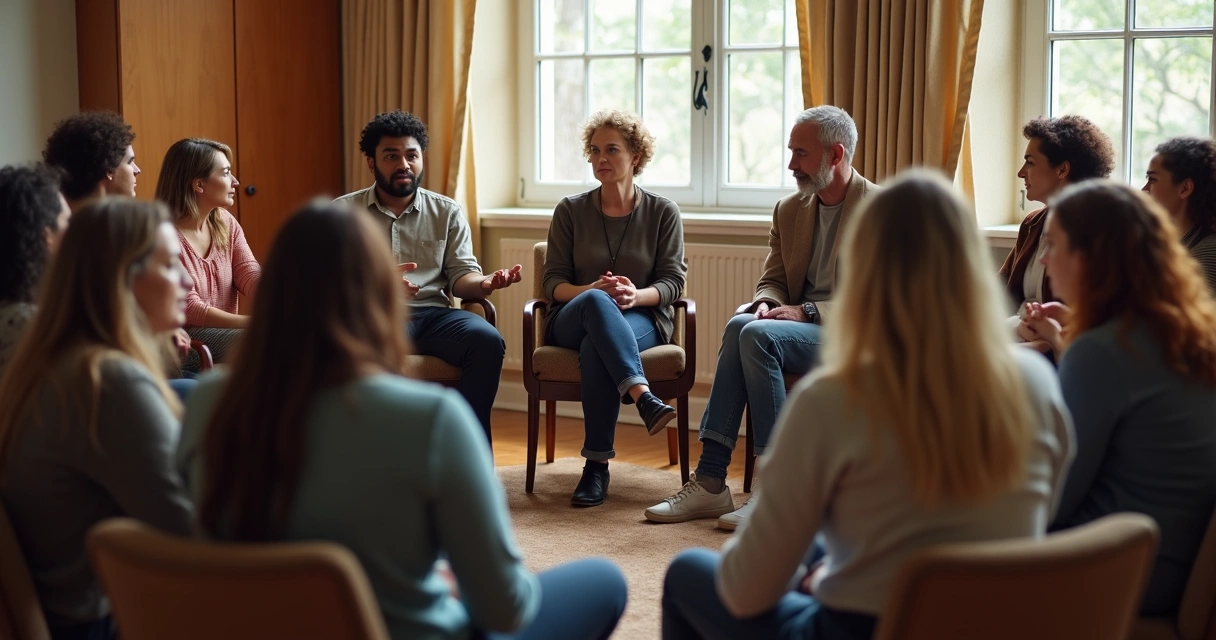
In our experience, acceptance is not a single act, but a practice. Groups that heal together set up structures and habits that encourage it. Here are a few approaches we have seen work:
- Encouraging open dialogue, even when it is uncomfortable
- Normalizing emotional expression—not labeling certain feelings as “bad” or “weak”
- Modeling vulnerability from leadership or respected members
- Allowing time for listening without immediate solution-seeking
- Rituals or ceremonies that acknowledge group pain and release it
Sometimes, acceptance starts with just one voice willing to name what has gone unspoken. Other times, it needs an outside facilitator to hold the process. Either way, our willingness to accept reality together shapes the future of the group.
How acceptance spreads healing
Acceptance has ripple effects. When one person in a group is accepted fully—story, emotions, differences—others begin to feel safer revealing their own truth too. Over time, this practice can move a group from frozen resentment to open connection.
- The group can address root causes, not just symptoms.
- Members build resilience to future conflict because they trust that reality can be faced.
- Creativity and cooperation rise as people feel seen and valued for who they truly are.

True healing only begins when we meet reality together.
The challenge and the gift
Sometimes, acceptance feels like giving up control. In truth, it is the opposite. When we accept what is real, the grip of fear, resentment, and shame loosens. We gain the clarity needed to decide what to do next. We see others not as enemies, but as fellow humans, equally shaped by the group’s journey. This is the foundation of collective emotional healing.
Conclusion: Why acceptance is key
The road to collective emotional healing always runs through acceptance. We can try to skip this step, push for change, or mask discomfort with quick solutions, but sooner or later, the need to see and name our pain returns. In our collective experience, the greatest breakthroughs happen when all voices are welcome, all truths are acknowledged, and the group stands together—no matter how messy the starting point.
Acceptance is not the end of the story. It is where the story can finally move forward, together.
Frequently asked questions
What is collective emotional healing?
Collective emotional healing is the process by which a group—whether a family, team, or community—recognizes and addresses shared emotional pain. It relies on honest communication, acceptance of diverse experiences, and joint responsibility for repair and growth. Unlike individual healing, this process focuses on the group’s dynamics and relationships, making healing possible for all involved.
Why is acceptance important for healing?
Acceptance allows groups to see problems without distortion or denial, making real progress possible. When members accept reality—emotions, history, and differences—defensiveness drops, trust builds, and solutions arise from a true understanding of what needs care and change.
How can I practice acceptance daily?
Small habits can help build acceptance in groups. You might listen without interrupting during conversations, acknowledge your own feelings before reacting, or reflect a colleague’s perspective back to them even when you disagree. Over time, these small practices help create an atmosphere where acceptance is normal.
Can groups heal without acceptance?
Groups cannot truly heal without acceptance because unacknowledged pain continues to affect relationships and decisions. Healing efforts that skip over acceptance tend to be temporary or superficial, while those grounded in acceptance bring real, lasting change to both individuals and the group as a whole.
What are benefits of collective healing?
When groups heal together, they experience more openness, stronger trust, increased creativity, and resilience against future conflict. Members feel valued and connected, which leads to ethical decision-making and richer cooperation. In our experience, collective healing always leaves a group more united and capable.